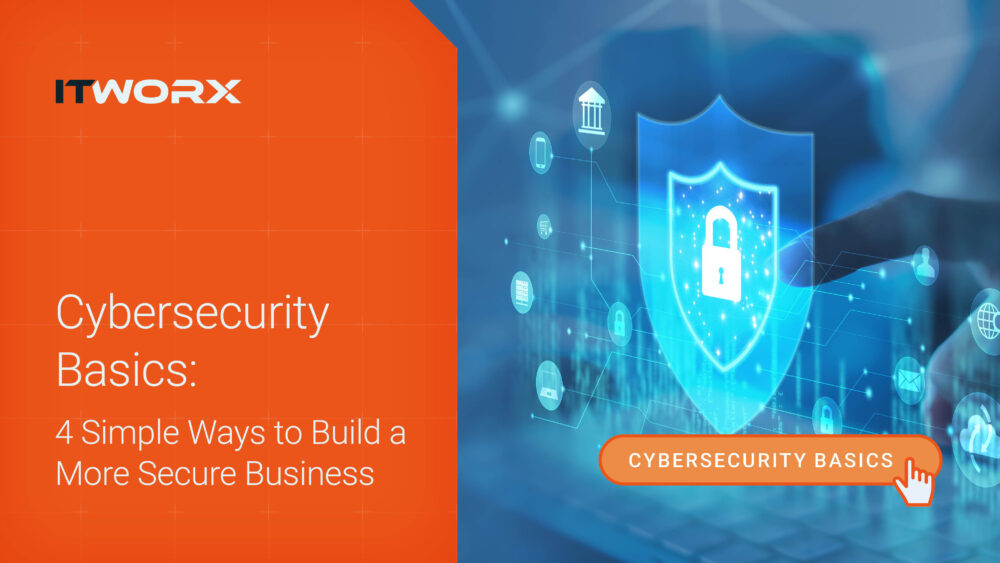
Cybersecurity Basics: 4 Simple Ways to Build a More Secure Business
3rd September, 2026
- Industry Insights
- Security
- IT Support
Cyber security can sometimes feel like a complex subject, particularly as the threats facing businesses continue to evolve. But protecting your organisation does not always require complicated technology or major changes to the way you work.
Throughout August, we shared four Cybersecurity Basics covering some of the fundamental steps every organisation can take to reduce cyber risk. From strengthening passwords and recognising phishing attempts, to creating a security-first culture and working towards recognised cyber security standards, each focuses on something practical businesses can do to improve their resilience.
While no single measure can eliminate cyber risk entirely, getting the fundamentals right can make your organisation significantly harder to compromise.
Here are four areas every business should be thinking about.
1. Strengthen Your First Line of Defence with Passwords and MFA
Passwords remain one of the most basic elements of cyber security, but they are also one of the areas where simple mistakes can leave businesses exposed.
Weak passwords, reused passwords and compromised login details can all give cybercriminals an opportunity to access business systems. When the same password is used across several accounts, the problem becomes even greater. If one set of credentials is compromised, attackers may try those same details elsewhere.
Encouraging a few straightforward habits across your organisation can make a considerable difference.
Employees should use long, unique passwords for their accounts rather than relying on the same memorable password across multiple services. Password managers can make this much easier by generating and securely storing credentials without requiring users to remember every password themselves.
Businesses should also enable Multi-Factor Authentication (MFA) wherever it is available. MFA requires an additional form of verification alongside a password. This means that even if a password falls into the wrong hands, there is another barrier between the attacker and the account. For businesses looking for straightforward ways to improve their security, strengthening password practices and introducing MFA are good places to start.
The takeaway: If MFA is available, switch it on. It is a simple additional layer that can make it considerably more difficult for an attacker to access an account using stolen credentials.
Download our eBook
Outlining the characteristics, processes and capabilities of an effective MSP, capable of providing effective support and delivering on the promise of digital technologies.
2. Make Sure Your People Can Spot Phishing
Phishing remains a common way for cybercriminals to target organisations because it focuses on people rather than trying to overcome technical security controls directly.
A phishing message might appear to come from a colleague, senior manager, supplier, customer or familiar organisation. The objective is usually to persuade someone to click a malicious link, open an attachment, disclose information or make a payment. And these messages are becoming increasingly convincing.
There are still warning signs employees can look out for. Unexpected requests to open attachments or follow links should be treated carefully, particularly when the message creates a sense of urgency or asks for passwords, payment details or confidential information.
Small inconsistencies can also be important. An email address that is slightly different from the genuine address, an unfamiliar web link or a request that does not follow the organisation's normal process can all be reasons to stop and check.
Technology has an important role in filtering malicious messages, but it cannot replace employee awareness. Regular cyber security awareness training can help employees understand the threats they are likely to encounter and, crucially, what they should do when they are unsure.
The takeaway: If something does not feel right, don't click. Verify the request independently using contact details you already know to be genuine, rather than replying to or using details contained within the suspicious message.
3. Build a Security-First Culture
Cyber security is not solely the responsibility of the IT department or your technology provider. Everyone within an organisation has a role to play. Creating a security-first culture means making cyber security part of everyday working practices and giving employees the confidence to question and report anything unusual.
That could be a suspicious email, an unexpected phone call, unusual activity on a device or simply something that does not seem quite right. The important thing is that employees feel able to speak up. If people are worried that they will be blamed for making a mistake or wasting someone's time, they may hesitate before reporting an issue. That delay can give a genuine security incident more time to develop.
Instead, organisations should encourage employees to ask when they are unsure, report suspicious activity quickly and learn from mistakes when they happen.
Leadership has an important role here too. When cyber security is discussed regularly and treated as a shared business responsibility, good security practices are much more likely to become part of the organisation's culture.
The takeaway: Employees should never be discouraged from reporting something because it might turn out to be harmless. When it comes to cyber security, checking early is far better than staying silent.
4. Build Trust Through Recognised Cyber Security Standards
Once the everyday fundamentals are in place, recognised cyber security standards can help organisations take a more structured approach to protecting their business.
Cyber Essentials is a UK Government-backed scheme designed to help organisations protect themselves against common cyber attacks. It focuses on a core set of technical controls that provide businesses with a practical security baseline.
For organisations that want to demonstrate a more developed approach to cyber security and assurance, frameworks such as Cyber Assurance can provide a broader assessment of the organisation's cyber security measures.
The value of recognised certification extends beyond the certificate itself. Working towards an established standard can help businesses identify weaknesses, improve internal practices and demonstrate to customers, suppliers and partners that cyber security is being taken seriously.
In an environment where organisations are increasingly connected through digital systems and supply chains, being able to demonstrate that commitment can also help build confidence with the businesses you work with.
Most importantly, certification should not be viewed as the end of the process. Cyber threats change, technology evolves and businesses themselves rarely stand still. New employees, devices, systems, suppliers and working practices can all introduce new risks over time.
The takeaway: Treat cyber security as an ongoing business priority. Regularly reviewing your systems, policies and staff awareness helps ensure the protections you have put in place continue to work as your organisation evolves.
Cyber Security Starts with Getting the Basics Right
Strong cyber security does not depend on one product, one policy or one person. It comes from combining sensible technology controls with informed employees, clear processes and an organisation-wide understanding of cyber risk.
Strong passwords and MFA can make accounts harder to compromise. Awareness training can help employees recognise phishing attempts. A positive security culture can encourage people to raise concerns before they become bigger problems. And recognised standards can provide a framework for putting those fundamentals into practice and demonstrating your commitment to security.
None of these measures needs to be overly complicated, but together they can make an important difference to your organisation's cyber resilience.
If you're unsure where your organisation currently stands, or you would like support strengthening your cyber security practices, achieving Cyber Essentials or understanding the next steps for your business, the team at ITWORX UK is here to help.
Get in touch with us at enquiries@itworxuk.com